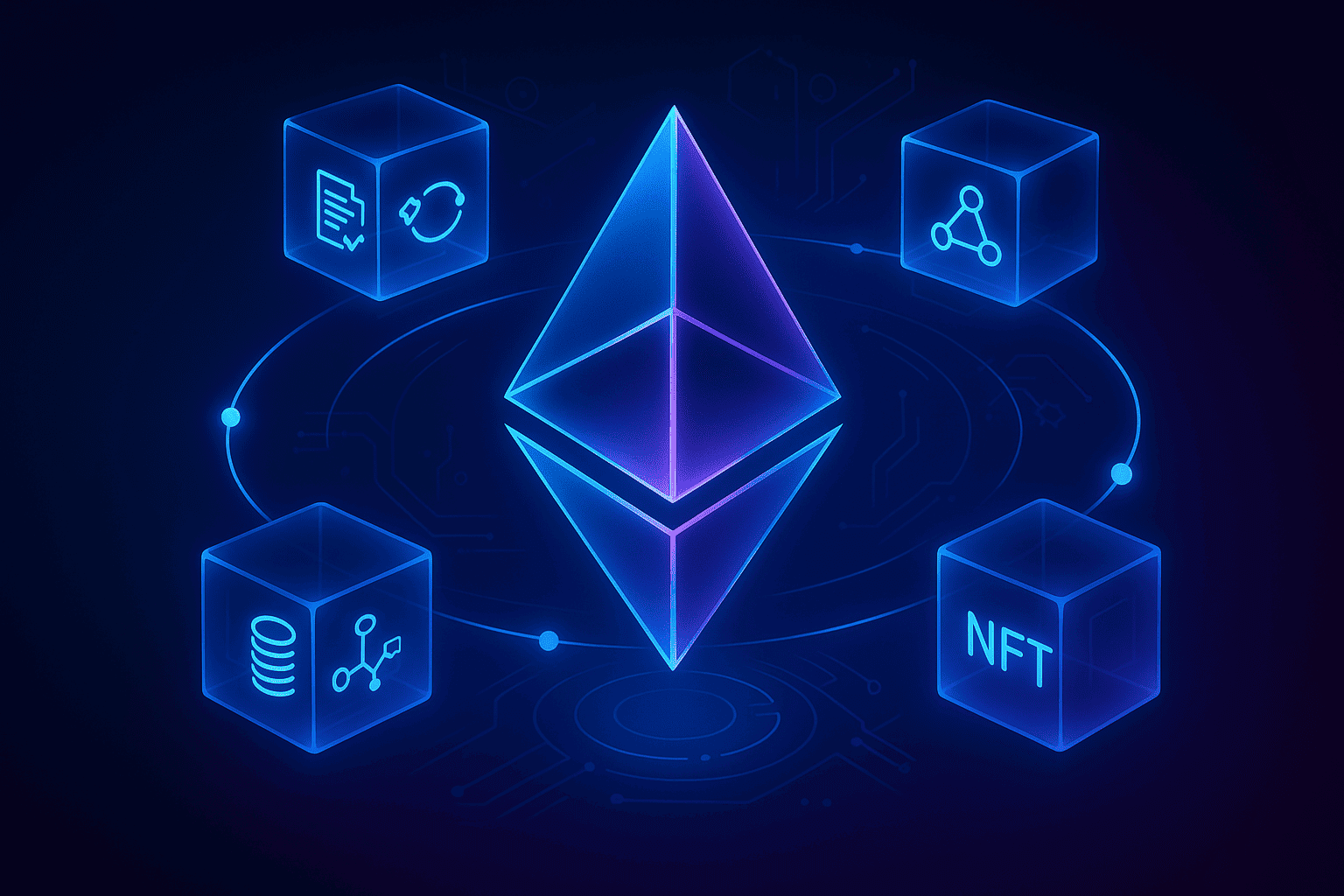

Ethereum functions as the programmable backbone of Web3, enabling trustless wallets, transparent state changes, and verifiable contracts. Its design supports DeFi, NFTs, and DAOs through interoperable assets and permissionless protocol integration. Scaling and governance efforts aim to balance throughput, security, and decentralization, shaping future resilience. With broad developer momentum and cross-chain potential, Ethereum’s central role invites careful assessment of trade-offs as the ecosystem evolves, leaving open questions about where innovation will most effectively unfold.
What Ethereum Delivers to Web3 Users
Ethereum delivers a robust, programmable layer that underpins Web3 functionality by providing a decentralized blockchain capable of executing smart contracts and hosting decentralized applications (dApps). The platform enables secure wallets, transparent transaction flows, and programmable trust with verifiable state changes. Gas fees reflect computational costs, incentivizing efficiency and consensus. Empirical evidence indicates reliable interoperability and broad developer adoption across diverse use cases.
How Ethereum Underpins DeFi, NFTs, and DAOs
Decentralized finance, non-fungible tokens, and decentralized autonomous organizations hinge on Ethereum’s programmable blockchain to provide trustless settlement, verifiable state, and composable infrastructure. The platform enables permissionless protocol composition and interoperable assets, yet faces scaling tradeoffs that influence throughput and latency. Empirical evidence underscores a trade between efficiency and network decentralization, guiding users toward resilient, transparent DeFi, NFT, and DAO ecosystems.
What Scaling and Governance Mean for Ethereum’s Future
How scaling and governance will shape Ethereum’s trajectory hinges on balancing throughput, security, and decentralization while aligning technical upgrades with community consensus.
The discussion centers on how scaling governance choices influence network resilience and long-term openness, guiding protocol revisions without compromising trust.
Evidence points to deliberate, inclusive decision-making as essential to sustainable ethereum development and broad systemic freedom.
How to Compare Ethereum With Layer 2s and Rivals: a Practical Framework
A practical framework for comparing Ethereum with Layer 2 solutions and rival networks centers on objective metrics that capture performance, security, cost, and decentralization.
Evaluations emphasize eth governance, on-chain data integrity, and cross-chain interoperability.
zk rollups illustrate scalability routes, while comparisons consider withdrawal latency, user experience, and developer tooling.
The framework supports transparent, evidence-based, freedom-minded assessment without bias or hype.
See also: strictnews
Conclusion
Ethereum remains the connective tissue of Web3, delivering programmable trust, verifiable state, and interoperable assets across DeFi, NFTs, and DAOs. Its layer-1 security and composability underpin scalable ecosystems, while ongoing scaling and governance refine throughput and resilience. A practical framework shows Layer 2s and rivals offer complementary paths rather than replacements. Like a foundation that supports evolving structures, Ethereum sustains innovation through evidence-based decisions, ensuring a durable, adaptable core for decentralized applications.